ABOUT TOA11Y

I spent 20 years building WordPress sites. Most of them were broken.

Not broken in a way you could see. Broken for anyone using a keyboard, a screen reader, or a phone on a slow connection. I was part of the problem. Now I audit and rebuild the sites that the plugin economy left behind.

  • 20years in WordPress
  • 1,000+sites audited by hand
  • 100+video teardowns published
[FOUNDER NAME], founder of TOA11Y, testing a website with a screen reader
Act I

Twenty years, thousands of installs, and a blind spot the size of the web

I started building websites around [YEAR], back when WordPress was a blog tool and "accessibility" mostly meant making sure your images had alt text. I watched it grow into a platform that runs 40% of the web. I built on it for two decades — themes, plugins, custom post types, the whole stack.

I was good at it. Fast, too. I could spin up a site with a page builder, a stack of premium plugins, and a slider in a weekend. Clients loved it because it was cheap and they could edit their own content. I loved it because I could bill for four projects in the time one custom build would have taken.

What I didn't notice

Nobody was testing these sites with a keyboard. Nobody was opening NVDA and listening to what a screen reader actually said. Nobody was loading the homepage on a throttled 3G connection to see if it took fourteen seconds to render.

I was shipping sites with unlabeled form fields, focus traps in modals, contrast ratios that failed AA, and markup that looked fine in a browser but made no sense to assistive technology. The page builder generated the HTML. I didn't read it. I didn't know I was supposed to.

I wasn't a bad developer. I was a developer who never used the product the way the people who needed it most were using it.

[FOUNDER NAME]

The clients didn't complain, because the clients didn't know either. Automated scanners showed green checkmarks. The sites looked fine. Everyone assumed "fine" meant "fine for everyone."


Act II

The audit that ended my WordPress career

A client hired me to "make their site accessible" before a contract renewal. I did what everyone does: I installed an overlay plugin, ran an automated scan, and sent them a PDF showing everything was green.

A week later, a blind user emailed their support line to say the site was still unusable. The overlay had "fixed" the markup issues it could detect. It hadn't touched the keyboard trap in the checkout flow. It hadn't fixed the fact that the screen reader announced the wrong page title on every route. It was a bandage on a broken arm.

I opened NVDA for the first time and actually used the site the way that user had used it. It took me ninety seconds to hit a wall I couldn't get past. I'd been shipping this for twenty years.

The overlay didn't fail because it was badly built. It failed because it was solving the wrong problem.

[FOUNDER NAME]

So I stopped

I stopped installing plugins to fix problems the plugins had created. I stopped trusting automated scanners to tell me whether a site worked. I started reading the HTML my tools generated, and I started testing every site with a keyboard, with NVDA, with JAWS, with VoiceOver, and on a real throttled phone.

That was slower. It was also the first time in twenty years I felt like I was actually doing the job.

Act III

The work I actually do now

I audit websites by hand. I test them the way real users use them — with a keyboard and no mouse, with NVDA, JAWS, and VoiceOver, and on a throttled mobile connection. Every barrier I find gets documented in writing and on video. Then I rebuild what's broken, by hand, in semantic HTML, W3C-valid code, and a Django/Python backend that doesn't collapse under its own dependencies.

I've now personally audited over a thousand sites. I've published more than a hundred video teardowns showing exactly what was wrong and exactly how I'd fix it. The industry statistics haven't changed — roughly 98% of websites still fail accessibility standards, and the average site still takes fifteen seconds to load on a real phone.

That's the work. It's slower than the way I used to build. It's also the only version of this job I can still do in good conscience.

1,000+
Sites personally audited by hand
100+
Video teardowns published
~98%
Of websites fail accessibility standards (industry studies)
~15s
Average site load time on a real mobile connection
WHAT I BELIEVE

Four convictions that run this practice

Proof beats adjectives

I don't tell you your site is broken. I show you the recording of a screen reader failing to complete your checkout, and let you decide.

Compliance is a posture, not a project

A one-time audit is a snapshot. Websites change. Real compliance is the documented, ongoing effort to keep them working as they change.

You should own your code

No page builder, no proprietary platform, no overlay vendor holding your site hostage. Hand-written HTML/CSS and a backend you control.

Nobody can promise compliance

Compliance is a legal determination made by a court or your attorney. What I give you is documentation of good-faith effort you can hand to them.

COMMITMENTS

What I won't do — even if you ask

These aren't preferences. They're the reason this practice exists.

  • Install an accessibility overlay and call the site fixed
  • Hand you a scanner PDF and charge you for an audit
  • Build on a page builder, a template kit, or a proprietary platform
  • Tell you your site is “ADA compliant” or “WCAG certified”
  • Promise that anything I do prevents a lawsuit
  • Take white-label work and let an agency put their name on mine
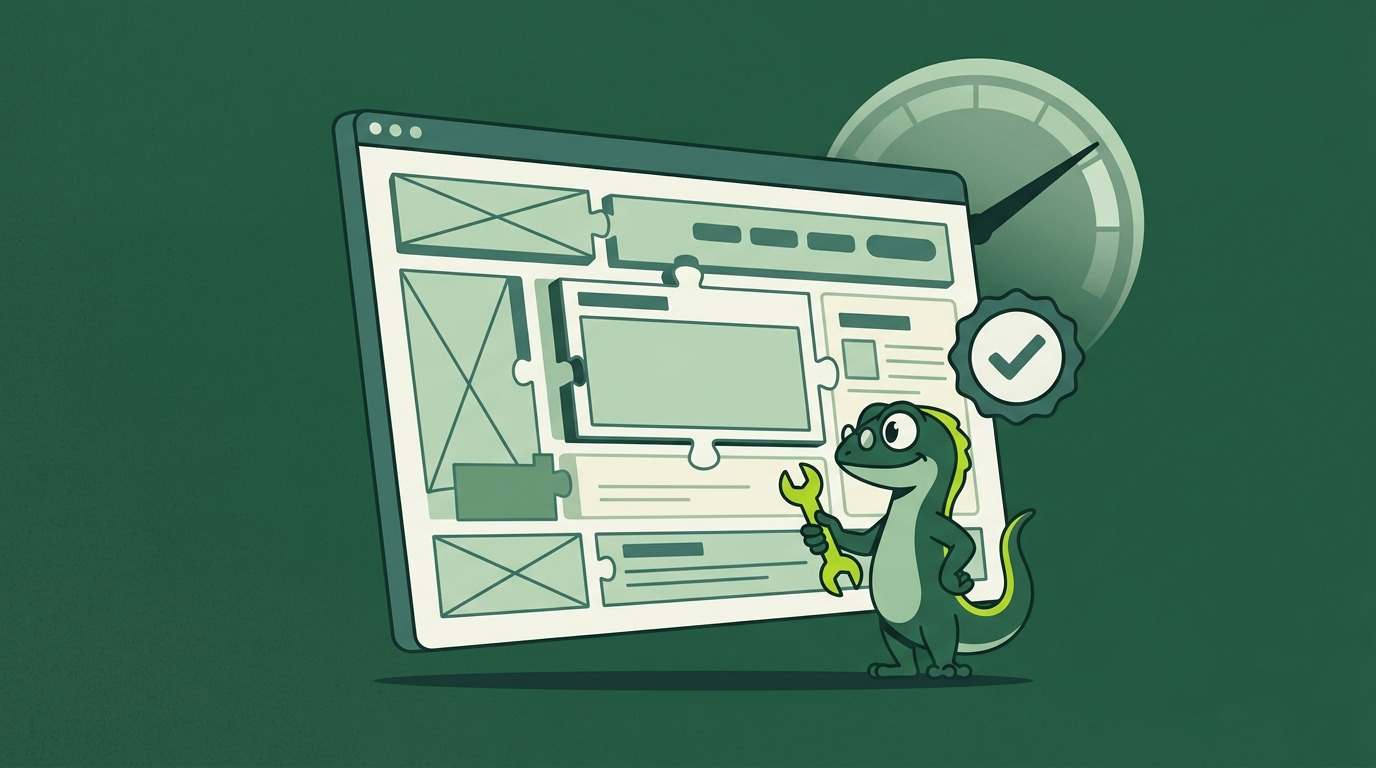
The TOA11Y gecko mascot wearing round glasses
THE MASCOT

Why there's a gecko on this website

Geckos climb walls that other animals can't. They see in the dark. They've been doing it for fifty million years without needing a redesign. I liked the metaphor — a small creature that adapts, that gets into places other things can't reach, that doesn't need a lot of infrastructure to do its job.

The gecko shows up in illustrations, in the newsletter, and on the blog headers. It does not appear in the logo. That was a deliberate decision — the work is the brand, not the mascot.

THE GECKO BULLETIN

Weekly teardown: a real website, everything broken in it, and exactly how we'd fix it

READY TO SEE WHAT'S BROKEN?

Stop guessing.
Get your website audited.

I've checked over 1,000 websites and documented the failures on video. Get a written audit showing exactly what's broken on yours — and a plan to rebuild it right.

Get Your Accessibility Audit
A correct website is the best legal defense — and the best salesperson.
Written accessibility audit report listing every barrier found on a website