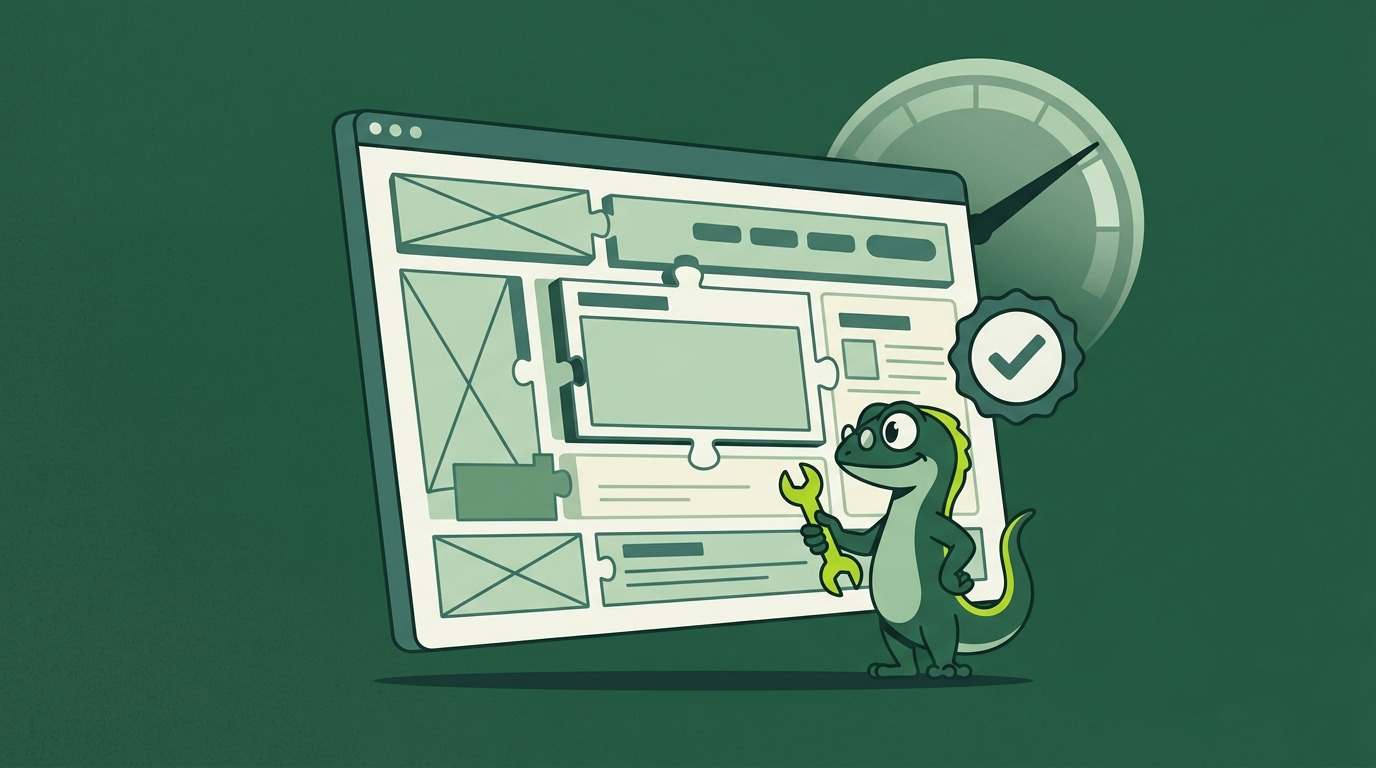
We rebuild websites by hand: semantic HTML, custom CSS, Django and Python backends, and nothing else in the way. No page builders. No plugin stacks. No overlay bolted on top. The result loads in under a second, scores 100 across every Lighthouse category, and is built to WCAG 2.2 AA standards from the first line of code.
You can keep patching a broken foundation. Most businesses do. Here is what that looks like compared to starting over with a clean build.
This isn't a redesign. It's a replacement of the foundation — the frontend, the backend, the markup, and the way the site is maintained after launch.
Semantic elements used for their intended purpose: <header>, <nav>, <main>, <section>, <article>, <footer>, <button>. Every page validated against the W3C HTML specification. If it doesn't validate, we don't ship it.
No Bootstrap defaults, no Tailwind utility soup, no page-builder generated classes. Hand-authored CSS with custom properties for the design system. Every rule is there because we wrote it, and every rule can be explained.
Secure, fast, and built for your actual data model. No plugin marketplace, no third-party admin panels, no dependency on a platform vendor's roadmap. Django's ORM, forms, and security defaults are the reason it stays fast and stays safe.
Semantic markup, correct heading structure, real form labels, visible focus indicators, keyboard-operable everything, contrast verified at 4.5:1 minimum. Tested by hand with NVDA, JAWS, and VoiceOver before we call a build finished.
The heavy parts of a modern site — the page builder's JavaScript, the plugin stack, the render-blocking third-party widgets — are gone. What's left is your content, styled, served fast, and cached aggressively. Real measured mobile LCP is [X.Xs] on the sites we've rebuilt.
We don't consider a build complete until a clean Lighthouse run shows 100 in Performance, Accessibility, Best Practices, and SEO. If any category drops below 100, we find out why and fix it before launch. This is a target we hold ourselves to, not a number we can guarantee — Lighthouse scores fluctuate with Chrome updates and server conditions.


Screenshots are illustrative. Real Lighthouse reports are included in every audit report we deliver.
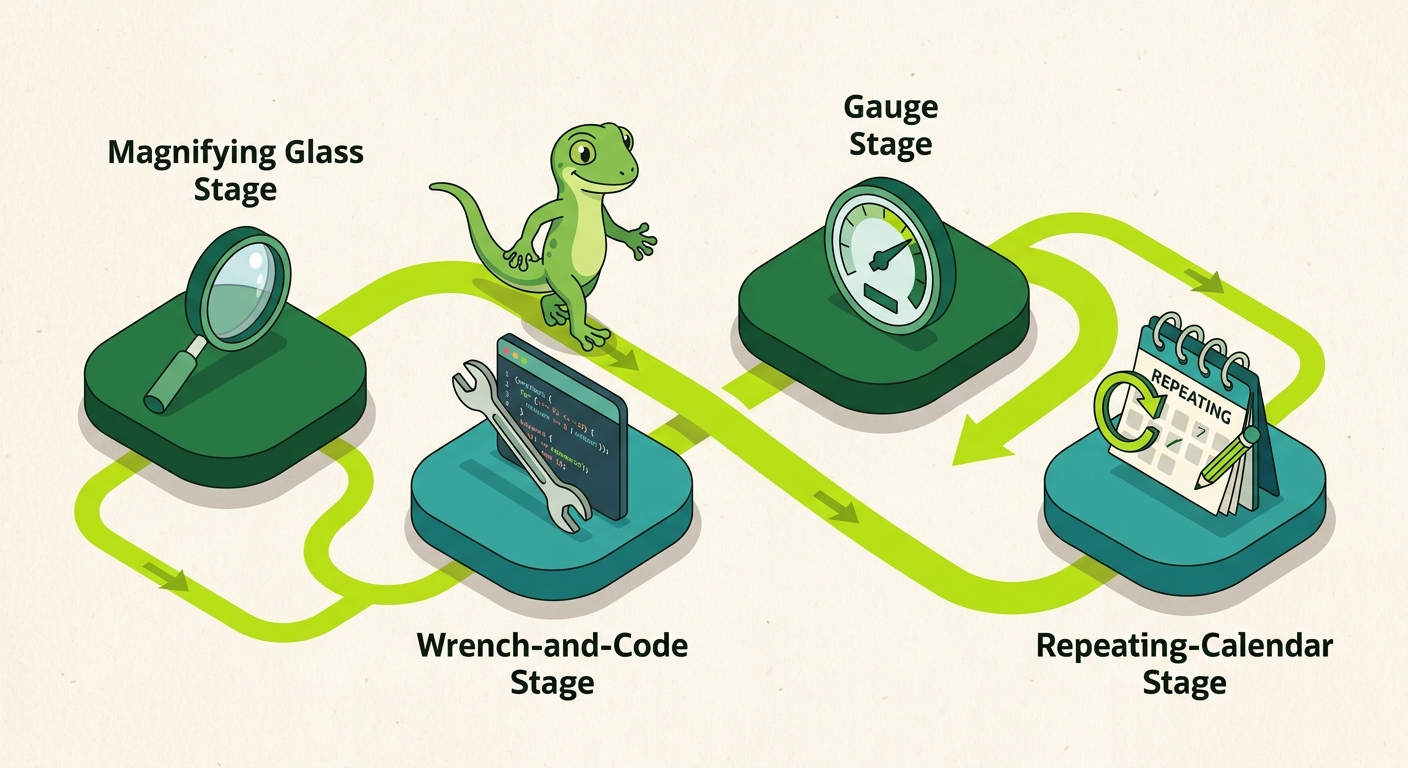
Before we rebuild anything, we audit what you have. The audit tells us what's broken, why it's broken, and what the rebuild needs to fix.
We agree on what's being rebuilt, what's being carried over, and what's being left behind. Fixed-scope proposal, fixed price.
Hand-written HTML, custom CSS, Django backend. Weekly progress updates. Staging environment you can use from day one.
Manual AT passes, W3C validation, Lighthouse runs, keyboard testing. Everything documented in a written handover.
We deploy, then re-audit the live site to prove the fixes held. You get the same documented report a new client would get.
Every second of load time is measurable revenue. Every trapped keyboard user is an abandoned cart. Rebuilds here pay for themselves in months.
Rebuilds for e-commerce →Patients who can't book or read their records go elsewhere. Accessibility here is patient care — and a rebuild is how you deliver it.
Rebuilds for healthcare →The DOJ Title II deadline is 2026–2027. A rebuild is often faster than retrofitting a legacy CMS to meet WCAG 2.1 AA.
Title II rebuilds →Compliance is a legal determination. Only a court or your attorney can make it. A rebuild built to WCAG 2.2 AA standards is a strong good-faith effort — it is not a legal guarantee, and we will never present it as one.

You can ask for a rebuild directly, but we will still run a short audit as the first phase. It's how we know what your current site is doing wrong and what the rebuild needs to fix. The audit fee is credited toward the rebuild if you hire us.
It comes with you. We migrate your pages, your posts, your product catalog, your images — whatever your site actually contains. Content isn't thrown away in a rebuild; the platform underneath it is replaced.
Not necessarily. A rebuild replaces the code and the foundation, not the visual identity. If you like how your site looks, we rebuild it to look the same — but faster, cleaner, and accessible. If you want a redesign, that's a separate conversation we can have.
Yes. We build what they design. What we won't do is hand-write markup to mimic a broken design — if a design has contrast failures or motion that can't respect reduced-motion preferences, we'll flag it early so it can be adjusted.
Rebuilds are quoted per project after the audit. The scope depends on how many templates, how many user journeys, and how much content needs to be migrated. You get a fixed-price proposal before any work begins — no hourly billing, no change-order surprises.
Then we'll hand off to them. We'll audit the current site, produce a remediation plan your developer can execute, and re-audit after the work is done. If they'd rather we handle specific pieces, that's fine too.
We hold ourselves to a target of 100 across Performance, Accessibility, Best Practices, and SEO — and we don't consider a build complete until a clean run shows those numbers. But Lighthouse scores fluctuate with Chrome updates, server conditions, and third-party services. The number is a target we hit consistently, not a guarantee we can make in perpetuity.
No. A rebuild built to WCAG 2.2 AA standards is a strong good-faith effort and a defensible position. It is not a legal determination. Compliance with the ADA, Section 508, or any other law is made by a court or a regulator, not by a developer. What you get from us is documentation you can hand to your attorney if the question ever comes up.
Every rebuild starts with an audit. Get a written report showing exactly what's broken on your current site — and a plan to replace the foundation it's built on.
Start with an audit